Expert Contractors
Asphalt Paving Contractors in Sunnyvale, CA
- Engineered Hot Mix Asphalt (HMA) paving designed for Sunnyvale traffic loads, private roadways, and parking areas.
- Soil stabilization and Class 2 Aggregate Base installation adapted to Sunnyvale expansive alluvial clay soils.
- Strict compliance with City of Sunnyvale Public Works standards, Caltrans Section 39, and Title 24 ADA slopes.
We deliver full-depth asphalt paving, structural overlays, and pavement reconstruction across Sunnyvale and surrounding Santa Clara County properties. Our team executes high-durability paving engineered to prevent rutting, alligator fatigue, and drainage failure.
ASPHALT PAVING CONTRACTORS OPERATING IN SUNNYVALE
This satellite location is operated by We Love Paving, Inc., a licensed CSLB #1049649, DIR #1000590190, and CA Carrier #571708 paving entity. We provide full-scope asphalt paving, structural reconstructions, and surface rehabilitation for multi-family developments, HOA communities, private estates, and commercial centers throughout Sunnyvale and the broader Santa Clara County region.
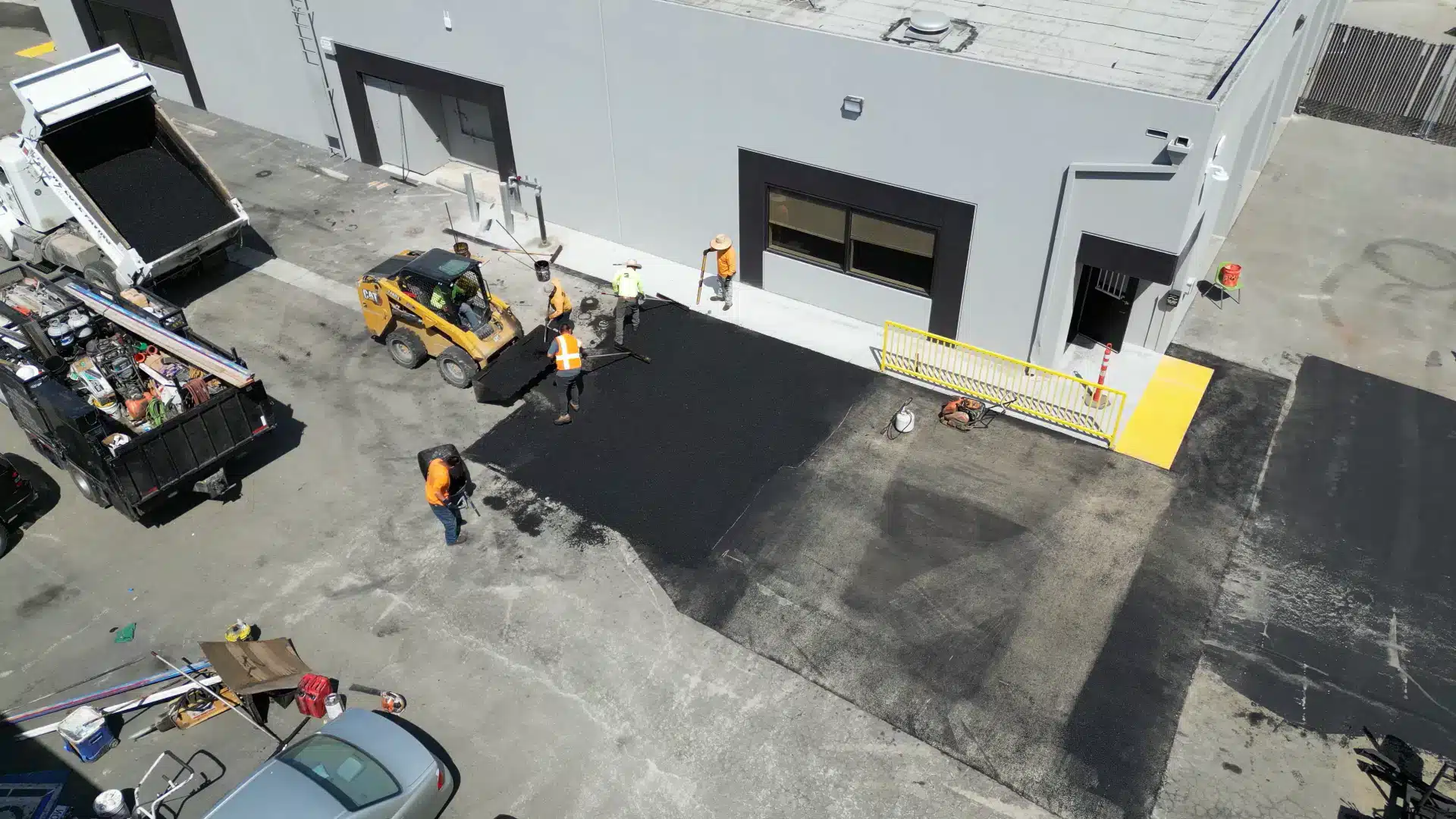
DENSITY-ENGINEERED ASPHALT PAVING FOR SUNNYVALE PROPERTIES
Pavement surfaces in Sunnyvale endure consistent stress from heavy vehicle traffic, environmental exposure, and expansive clay subgrades. When subbases suffer moisture intrusion or inadequate compaction, asphalt binders break down rapidly manifesting as deep rutting, edge failure, and structural alligator cracking that creates severe safety risks for property owners.
We eliminate pavement failure at the root through precise mix designs, mechanical subgrade stabilization, and calibrated hot-mix compaction. Review our engineering specifications below to see how our paving methods ensure long-term structural integrity and compliance for your facility or property.
DEMAND PRECISION ASPHALT PAVING IN SUNNYVALE
Our crew provides structural paving, full-depth reclamation, and asphalt overlays tailored to Sunnyvale municipal standards and site-specific load requirements.
ENGINEERING SPECIFICATIONS & FIELD EXECUTION
Our paving operations in Sunnyvale follow rigid quality control steps—from Falling Weight Deflectometer subgrade testing to multi-pass vibratory roller compaction. We adhere strictly to Caltrans specifications and local public works guidelines to ensure maximum load distribution.
- Subgrade Density Verification
- Title 24 ADA Slope Limits
- Caltrans Section 39 Compliance
- Thermal Imaging Monitoring
This Is What Our Clients Say About Our Work
Subgrade Engineering & Expansive Soil Mitigation in Sunnyvale
Sunnyvale properties sit predominantly on alluvial clay deposits with high plasticity indices, making subgrade preparation the critical phase of any asphalt installation. Untreated clay subgrades absorb winter rainwater, swelling and exerting upward hydraulic force that fractures thin asphalt mats. Without engineered subgrade isolation, new asphalt will experience premature base failure within 24 to 36 months regardless of surface thickness.
Our field operations mitigate expansive subgrades by excavating compromised soils and installing Class 2 Aggregate Base compacted to a minimum 95% relative compaction per ASTM D1557 standards. Where high moisture tables exist near El Camino Real, Highway 237, or properties along Mathilda Avenue, we incorporate geotextile stabilization fabrics or lime treatment to create an impermeable, load-bearing platform capable of handling axle loads up to 20,000 lbs.
Hot Mix Asphalt (HMA) Selection & Thermal Compaction Control
Selecting the correct binder grade and aggregate size determines how well a paved surface withstands vehicle traffic and sharp turning radii. Standard light-duty mixes crumble under heavy vehicle impacts; asphalt applications in Sunnyvale demand dense-graded Type A HMA or Polymer Modified Asphalt binders capable of resisting ambient heat deformation during Bay Area summers.
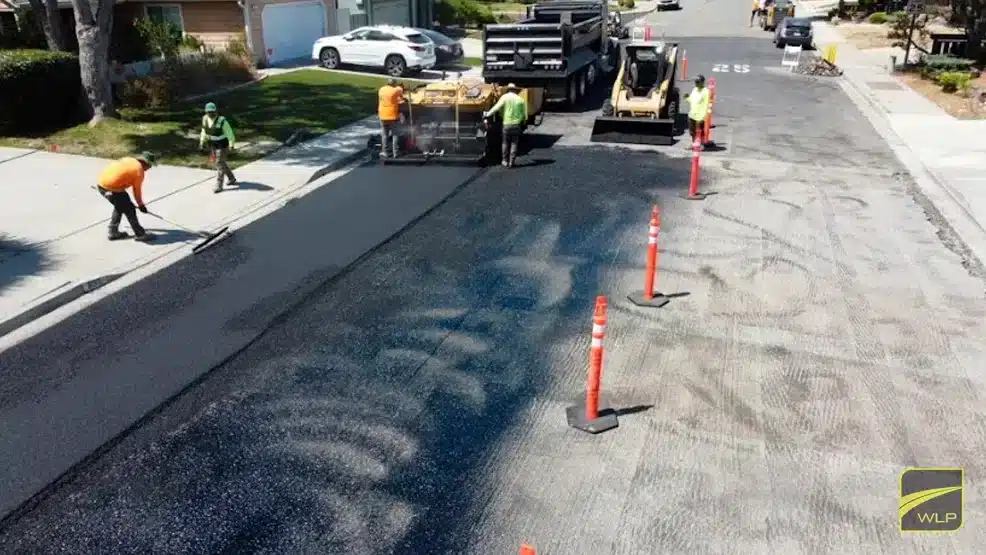
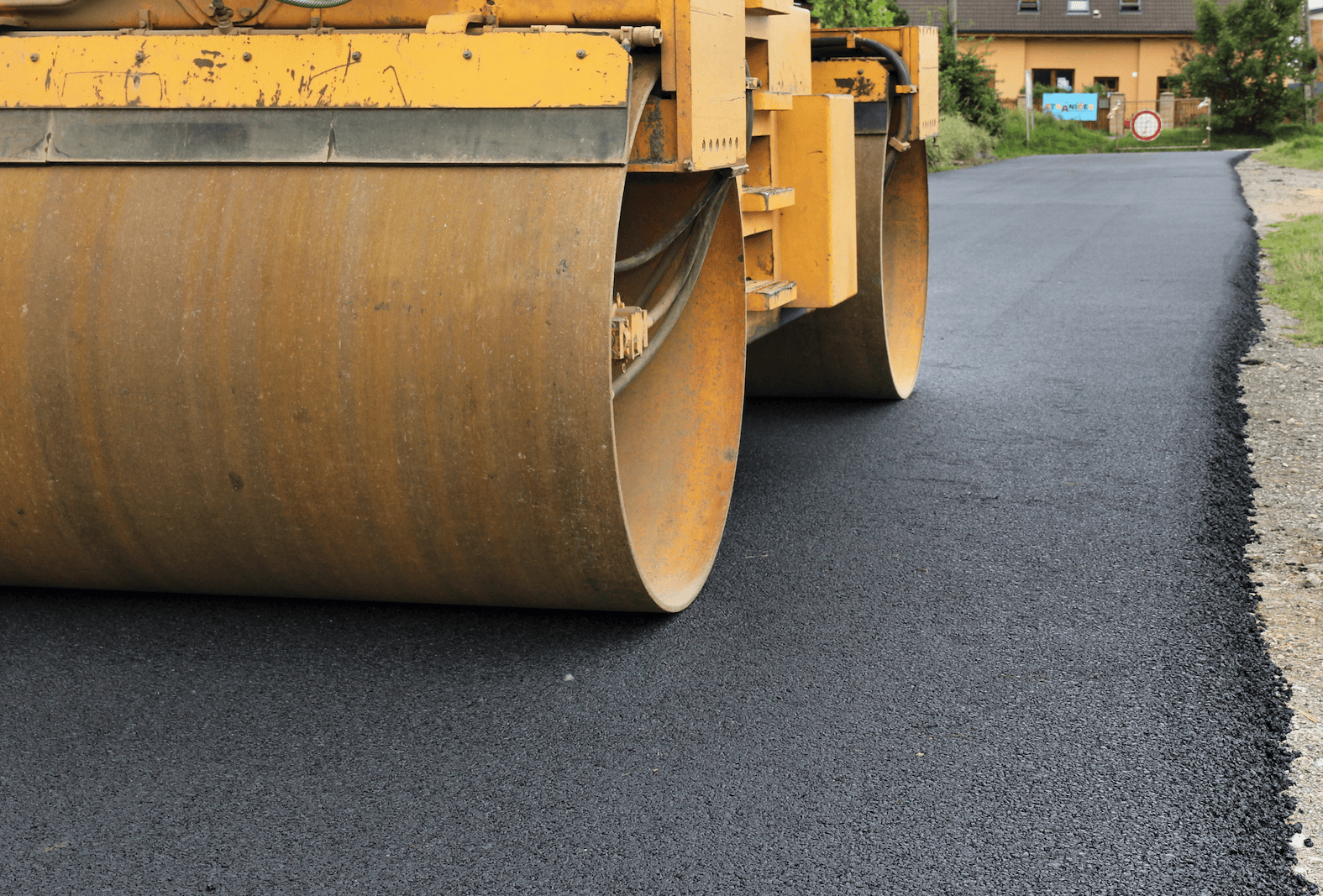
We place asphalt at strictly controlled laydown temperatures between 280°F and 300°F using self-propelled, heated screed pavers to prevent aggregate segregation. Compaction is executed immediately using tandem steel-wheel vibratory rollers monitored with nuclear density gauges, ensuring a finished air void target between 4% and 7%. This density level locks out surface water penetration while maintaining structural flexibility under vehicle traffic. For specialized surface rehabilitation options, clients often review our structural asphalt resurfacing methods to determine if a full reconstruction or structural overlay is required.
TECHNICAL SPECIFICATIONS & COMPLIANCE DATA FOR SUNNYVALE PAVING
The following technical matrix outlines our structural paving standards, regulatory compliance factors, and field testing metrics applied across paving projects in Sunnyvale.
| What We Check | Typical Contractor | How We Do It | What You Get |
|---|---|---|---|
| Subgrade Preparation | Visual check with no soil testing; paving directly over uncompacted clay | ASTM D1557 density testing & Class 2 Aggregate Base soil stabilization | Prevents premature base failure |
| Mix Selection & Heat | Basic commercial asphalt prone to rutting under summer heat | Caltrans Section 39 Type A HMA placed at strict 280°F–300°F laydown temps | Resists heavy vehicle rutting |
| Drainage & Compliance | Eyeballed slopes leading to standing water and ADA liability risks | Laser-guided transit levels ensuring 1.5%–2.0% drainage & Title 24 compliance | Zero water pooling & full ADA compliance |
| Compaction Execution | Standard roller passes leaving high air void levels that trap water | Tandem vibratory steel rollers targeting 4%–7% in-place air voids | Sealed, watertight surface |
City of Sunnyvale Civil Standards, Drainage & Title 24 Compliance
Asphalt installations in Sunnyvale must balance structural capacity with strict environmental and accessibility codes. Inadequate cross-slopes lead to standing water, which degrades the asphalt-aggregate bond (stripping) and violates municipal stormwater management mandates. Furthermore, parking areas and accessible pathways must comply with California Title 24 Disabled Access Regulations to prevent liability issues.
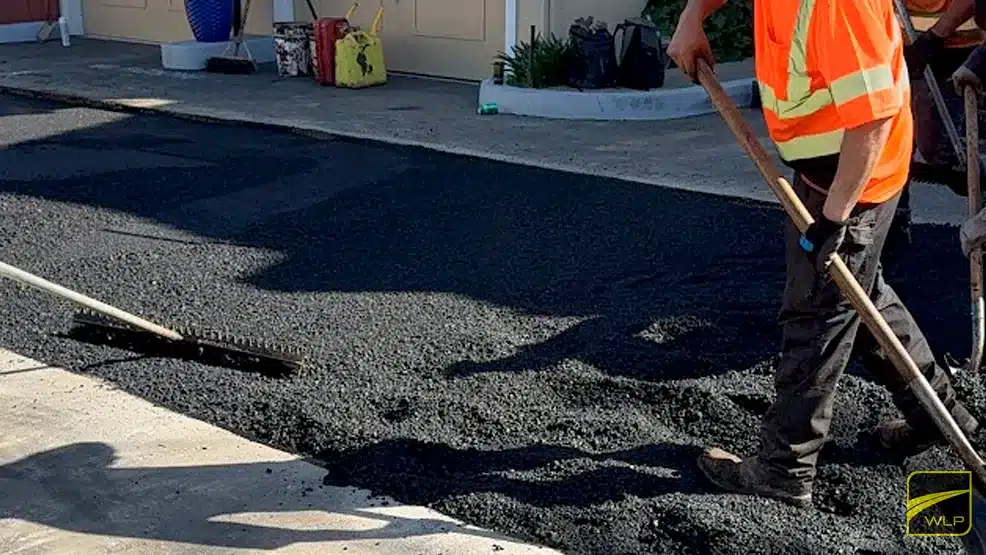
We design and pave all drive aisles, parking stalls, and drainage channels with precision laser-guided grading to guarantee a minimum 1.5% to 2.0% drainage slope toward catch basins. Accessible stalls and walkways are paved with strict tolerances, ensuring cross-slopes never exceed the legal maximum of 2.0% in any direction. Our engineering team handles all grading profiles to guarantee seamless integration with City of Sunnyvale public right-of-way connections. Property owners planning site upgrades can reference our guide on commercial asphalt paving to align site planning with local codes.
Common Questions From Sunnyvale Property Owners
Answers to the questions people ask before requesting an asphalt or parking lot estimate.
What binder grade and asphalt mix is recommended for paved surfaces in Sunnyvale?
We typically install Caltrans Section 39 Type A Hot Mix Asphalt (HMA) with a 1/2-inch or 3/4-inch aggregate gradation depending on the pavement lift thickness. For high-traffic driveways and entry lanes subject to heavy axle loads, polymer-modified binders (PG 64-28 or PG 70-10) are used to prevent rutting and surface displacement during warmer weather.
How do expansive clay soils in Sunnyvale affect pavement lifespan?
Sunnyvale alluvial clay soils swell when saturated and shrink during dry months. If asphalt is laid over an uncompacted or thin aggregate base, this soil movement causes severe alligator cracking and subbase failure. We mitigate this by installing a minimum 6-inch to 8-inch Class 2 Aggregate Base compacted to 95% relative compaction, often accompanied by subgrade geotextile stabilization fabric.
What are the California Title 24 slope requirements for paved areas?
Under California Title 24 and 2010 ADA Standards, accessible parking spaces, access aisles, and pathways must have a surface slope no steeper than 1:50 (2.0%) in any direction. Our crews utilize laser transit levels during base grading and paving laydown to guarantee that final cross-slopes do not exceed 2.0%, avoiding compliance violations.
How long must newly paved asphalt in Sunnyvale cure before opening to vehicle traffic?
Light vehicle and pedestrian traffic can typically resume 24 hours after compaction. However, heavy truck traffic and delivery fleets should be restricted for 48 to 72 hours, especially during high ambient summer temperatures, to allow the hot-mix asphalt binder to fully cool and lock aggregate matrices into place.
What is the difference between a structural asphalt overlay and full-depth reconstruction?
A structural asphalt overlay involves milling the top 1.5 to 2 inches of degraded asphalt and applying a new HMA wearing course over an intact base. Full-depth reconstruction requires excavating the asphalt and base rock down to the subgrade, stabilizing the subsoil, and rebuilding the base and asphalt layers from the ground up necessary when subbase failure or deep rutting is present.
Request Your Estimate
Tell us what you need help with. We'll review the project details and follow up with next steps, no obligation.
Phone
669-256-5784
Email
[email protected]
Service area
Sunnyvale and Santa Clara County
Hours
Mon–Fri 8:00 AM – 5:00 PM
Start Your Free Project Request
Use our quick estimate form to send your project details. It only takes a few minutes and helps us give you a better response.
- Project type and location
- Parking lot, driveway or commercial property
- Timeline and service needed
- Optional notes about damage or compliance issues
Serving Sunnyvale and Nearby Cities
Sunnyvale Asphalt Paving serves Sunnyvale, Mountain View, Santa Clara, Cupertino and Los Altos, plus the surrounding commercial and residential areas of Santa Clara County.